
A B2B CRM (Business-to-Business Customer Relationship Management) is a specialised digital platform that enables companies to manage, track and nurture interactions with other businesses throughout complex, long-term sales cycles. Unlike consumer-focused systems that prioritise high-volume transactions, a B2B CRM centres around detailed account management, supporting multi-stakeholder decision-making and high-value professional relationships.
Choosing the right B2B CRM is a strategic turning point for any organisation looking to scale predictably. By centralising data, automating manual workflows and providing real-time visibility into the sales pipeline management, the platform becomes more than a database and acts as the primary engine for sustainable growth. This guide explores the main advantages of these systems and how you can select the perfect solution to align your teams and accelerate your revenue.

Key takeaways
- Built for complex sales cycles: a B2B CRM supports multi-stakeholder decision-making and long-term account management, unlike B2C-focused systems.
- Drives predictable revenue growth: real-time pipeline visibility and historical data improve forecasting accuracy and strategic planning.
- Unifies teams and data: centralised information and integrated automation align sales and marketing around shared KPIs.
- Scales with your business: the right CRM offers automation, open APIs and flexible tiers to support future expansion without the costly migrations.
What is a B2B CRM?
In a professional setting, a B2B CRM is the foundational software used to organise every touchpoint between your brand and your corporate clients. It differs from B2C versions because it must handle the intricacies of the B2B sales cycle, which often involves months of nurturing and multiple decision-makers within a single account.
Instead of just tracking a name and a purchase, these Customer Relationship Management systems allow you to map out entire organisations. You can see which director attended a webinar, which manager opened a proposal and where exactly that lead sits in your funnel. By using lead generation software that feeds directly into your CRM, you ensure that no high-value prospect ever falls through the cracks.
Why your company needs a specialised B2B CRM
Relying on spreadsheets or disjointed tools often leads to fragmented data and missed opportunities. A specialised system solves these issues by offering a unified view of your business health.
Aligning sales and marketing teams
One of the most significant hurdles in any B2B company is the gap between generating a lead and closing a deal. A B2B CRM bridges this gap by creating a shared environment where both departments work toward the same KPIs. When your marketing automation tools are integrated, sales reps can see exactly what content a prospect has consumed before they even pick up the phone. This alignment ensures that the transition from a Marketing-Qualified Lead (MQL) to a Sales-Qualified Lead (SQL) is fast and smooth.
Improving lead qualification and management
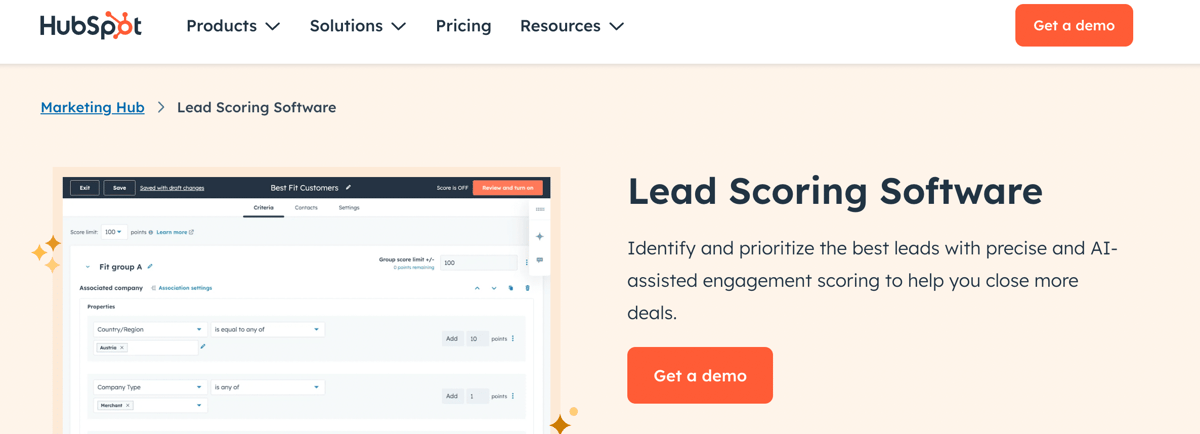
Not all leads are created equal. In long cycles, your team needs to know who to prioritise. Using lead generation software within your CRM allows you to implement lead scoring models. You can automatically assign points based on a prospect’s job title, company size or engagement level. This allows your sales force spends their time on the accounts that are most likely to convert, significantly improving your overall ROI.
Improved forecasting and reporting
For leadership, knowing what's coming in the next quarter is vital for planning and investment. Cloud-based CRM solutions provide real-time dashboards that offer a transparent view of your pipeline. Instead of guessing, you can use historical data to predict closure rates and identify where deals are stalling. This level of detail is essential for justifying marketing spend and proving the impact of your strategies to the board.
The best CRM for B2B companies
While there are many options on the UK market, the right choice depends on your specific technical needs and growth goals.
HubSpot CRM: the market leader
At Cyberclick, we frequently recommend HubSpot as a premier choice for B2B SaaS and industrial companies. It is widely considered one of the best Customer Relationship Management systems due to its intuitive interface and 'all-in-one' philosophy.
Key HubSpot features include:
- Allbound engine: combines inbound attraction with outbound efficiency.
- Advanced automation: from workflow automation to sequence-based follow-ups, it eliminates repetitive admin tasks.
- Native integration: it connects directly with thousands of other tools, from Slack to advanced ERPs, helping your data stay clean.
- Scalability: you can start with the free version and move to Enterprise tiers as your team grows, making it a future-proof investment.
Other notable contenders
While HubSpot excels in ease of use, here are a few other platforms that may suit specific niches:
- Salesforce: known for its advanced customisation options and suitability for massive, global enterprises with complex governance needs.
- Pipedrive: a strong choice for smaller, sales-led teams that need a simple, visual way to manage their deals.
- Microsoft Dynamics 365: often preferred by organisations already deeply immersed in the Microsoft ecosystem and requiring heavy ERP integration.
How to choose the right CRM for your organisation
Selecting the right CRM platform is a long-term commitment that should involve stakeholders from every department.
Assessing your technical requirements and budget
Before looking at features, define your problems. Do you struggle with client retention strategies, or is your main issue a leaky top-of-funnel? Consider the total cost of ownership, including license fees, implementation costs and the time required for training. For a mid-sized UK company, a typical implementation can take anywhere from one to three months, depending on the complexity of your data.
Evaluating ease of use and adoption rates
The best tool in the world is useless if your team refuses to use it due to frustrating or complex features. Prioritise platforms with high user adoption and intuitive navigation. Look for a provider that offers workflow automation to make your team's lives easier rather than more complicated. A system that feels like a partner rather than a chore will always deliver better data and results.
Scalability and future-proofing
Your business won't stay the same size forever. Choose a B2B CRM that can grow with you. This means checking for an open API for future CRM integration and making sure that the platform stays updated with the latest technological trends, such as AI-driven predictive analytics. In short, investing in a robust system now prevents a painful and expensive migration later.
Conclusion
Implementing a B2B CRM is not just a technical upgrade but rather a commitment to a more transparent, efficient and results-oriented way of working. By choosing a platform that aligns your sales and marketing teams, you create a foundation for predictable growth and stronger client relationships. Whether you are a marketing director looking for better attribution or an operations manager needing to clean up data, the right CRM is the key to unlocking your company's full potential.


Tanit de Pouplana
Content & Marketing Strategist at Cyberclick. Passionate about communication and content creation. Tanit holds a degree in Journalism from the Autonomous University of Barcelona.


Leave your comment and join the conversation