
A CRM is a strategic platform used to manage customer interactions, automate sales processes and centralise data to drive sustainable revenue growth. Currently, the most effective systems for UK SMEs are those that eliminate fragmented tech stacks and centralise data for both sales and marketing teams. By implementing a robust CRM, small businesses can make sure that every lead is nurtured and every customer interaction is recorded, regardless of whether the team is working in-person or remotely.
This guide breaks down the top five CRMs that have proven to be lifesavers for many small businesses in the UK.


Key takeaways
-
CRM as a growth engine: the best CRMs for small businesses act as AI-powered operating systems that unify sales, marketing and reporting, rather than mere contact databases.
-
HubSpot leads when it comes to scalability: HubSpot stands out for UK SMEs since it combines a genuinely helpful free tier with advanced automation and reporting that scales as pipelines grow.
-
UK compliance is a must: SMEs must choose CRMs with UK or EEA data hosting, strong DPAs and GDPR-ready architecture to comply with the Data (Use and Access) Act 2025.
-
Automation drives efficiency: modern CRMs reduce manual workload through automated lead routing, enrichment and pipeline management, freeing teams to focus on revenue-driving work.
Why your choice of CRM matters
Selecting the right CRM software is no longer a tactical IT decision but a fundamental driver of your company's digital maturity. Without a centralised system, your data remains fragmented, leading to missed opportunities and unreliable forecasting that can negatively impact stakeholder trust. A modern CRM solution allows you to bridge the gap between departments, making sure that your sales operations and marketing strategy are perfectly aligned.
When you move away from legacy spreadsheets and adopt a CRM, you empower your team to focus on high-value work rather than manual tasks. This shift is essential for marketers who need to comply with evolving privacy regulations while maintaining a competitive edge in a crowded market.
By choosing a platform that supports sales pipeline management and automated workflows, you can:
- Eliminate data silos: make sure that every department has access to the same real-time customer insights.
- Automate lead routing: move leads through the funnel faster with AI-driven assignment and notifications.
- Improve reporting accuracy: provide the board with accurate attribution data and predictable pipeline forecasts.
The top 5 CRMs ranked
We've put together a list of the top 5 CRMs based on our experience and the feedback from our clients. These five platforms, although different in their plans and capabilities, are all suitable for UK SMEs that need to focus on balancing cost-effectiveness with advanced technical capabilities.
HubSpot
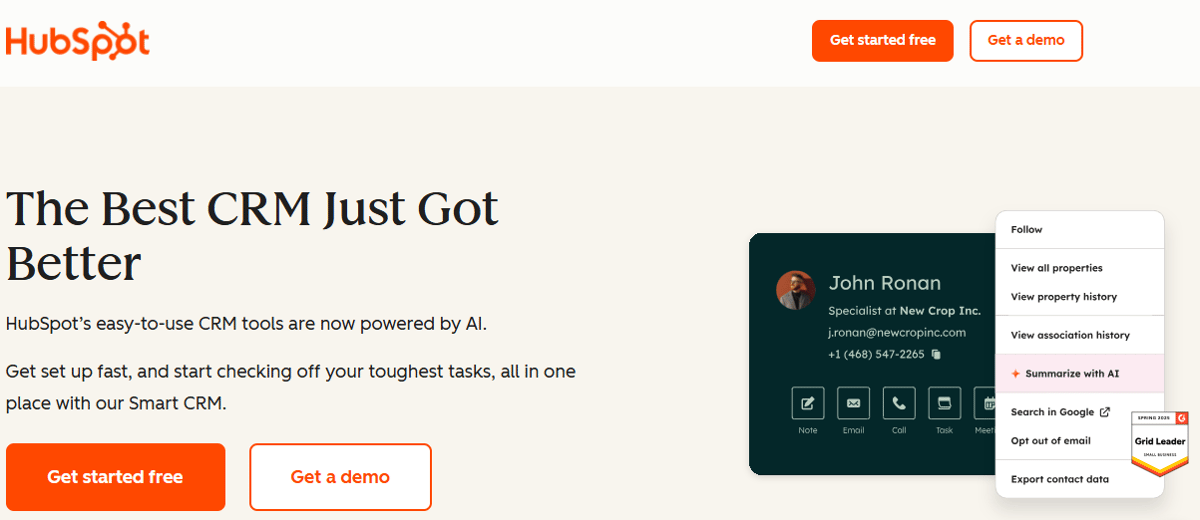
HubSpot is widely regarded as the best all-in-one solution for teams that want to integrate their marketing, sales and service functions into a single ecosystem. It is particularly famous for its free CRM tier, which offers a surprisingly complete set of features for no initial cost.
- Pros: the free version includes essential tools like email tracking, meeting scheduling and live chat, making it ideal for solo founders or very small teams. Its user interface is highly intuitive and can be mastered after a few training sessions, encouraging high adoption rates across the team.
- Cons: the jump from free or the Starter Bundle to Professional or Enterprise plans can be costly, sometimes reaching over £700 per month for marketing hubs. This, in turn, may require careful budget planning as you grow.
Pipedrive
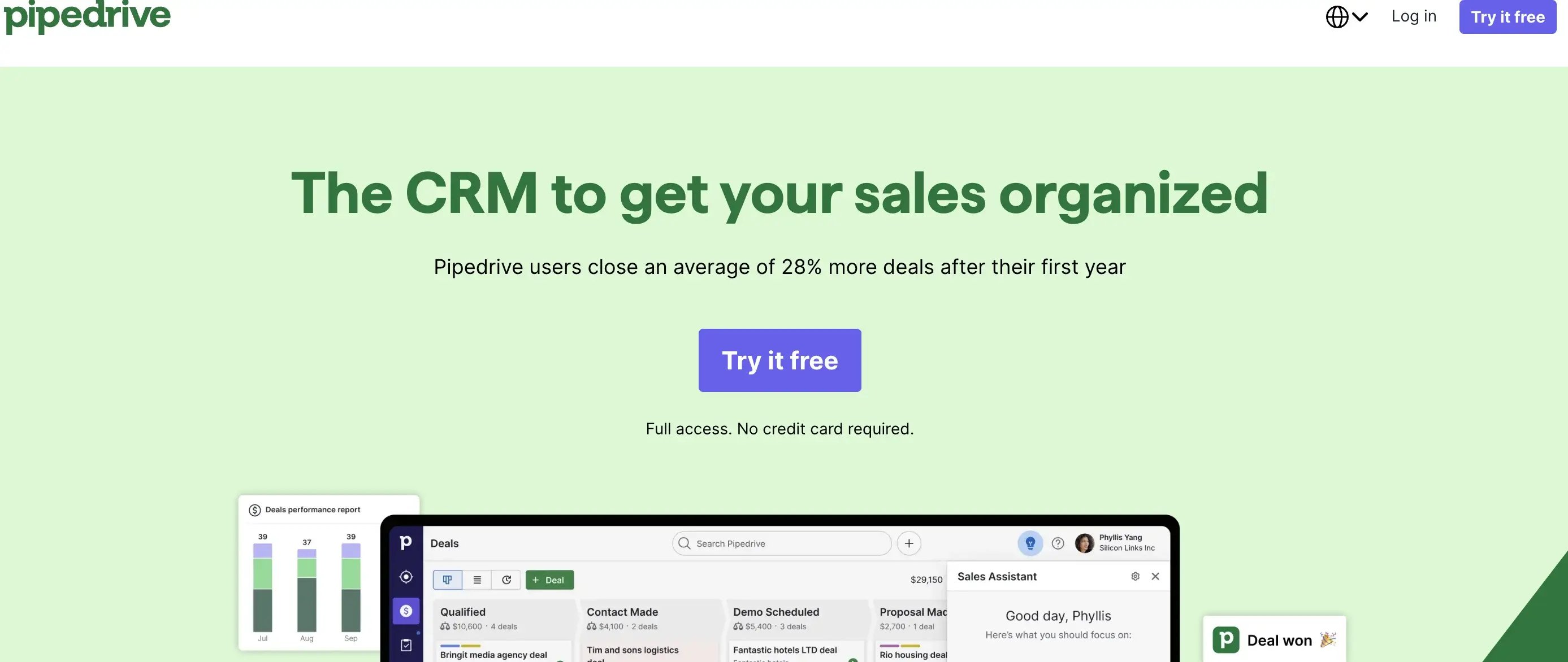
For businesses that are interested in sales pipeline optimisation above all else, Pipedrive offers a user-friendly, visual approach that keeps reps focused on closing deals. It is designed to be efficient and fast.
- Pros: the visual drag-and-drop pipeline provides instant clarity on where every deal stands, and the 'deal rotting' feature makes it so that no prospect is ignored for too long. It also includes an AI sales assistant that suggests the best next steps for each lead.
- Cons: it lacks the more complex marketing automation features that HubSpot offers, meaning that you may eventually need to pay for additional integrations or add-ons like 'LeadBooster'.
Zoho
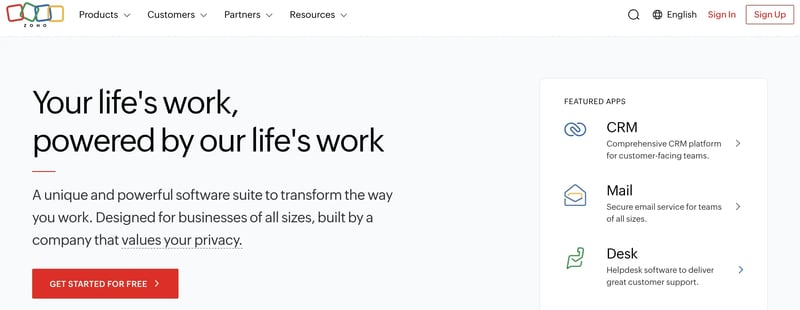
Zoho CRM is a powerhouse for customisation and offers some of the best 'feature-per-pound' value for small UK businesses. It is an excellent choice for companies with complex processes that need a highly tailored system.
- Pros: the 'Workplace Professional' tier includes advanced workflows, inventory management and custom modules that would typically cost double on other platforms. Its AI, called 'Zia', provides sophisticated predictive analytics and lead scoring.
- Cons: the interface can feel slightly dated compared to the modern aesthetic of HubSpot or Monday, and the initial configuration requires a more technical mindset.
Monday
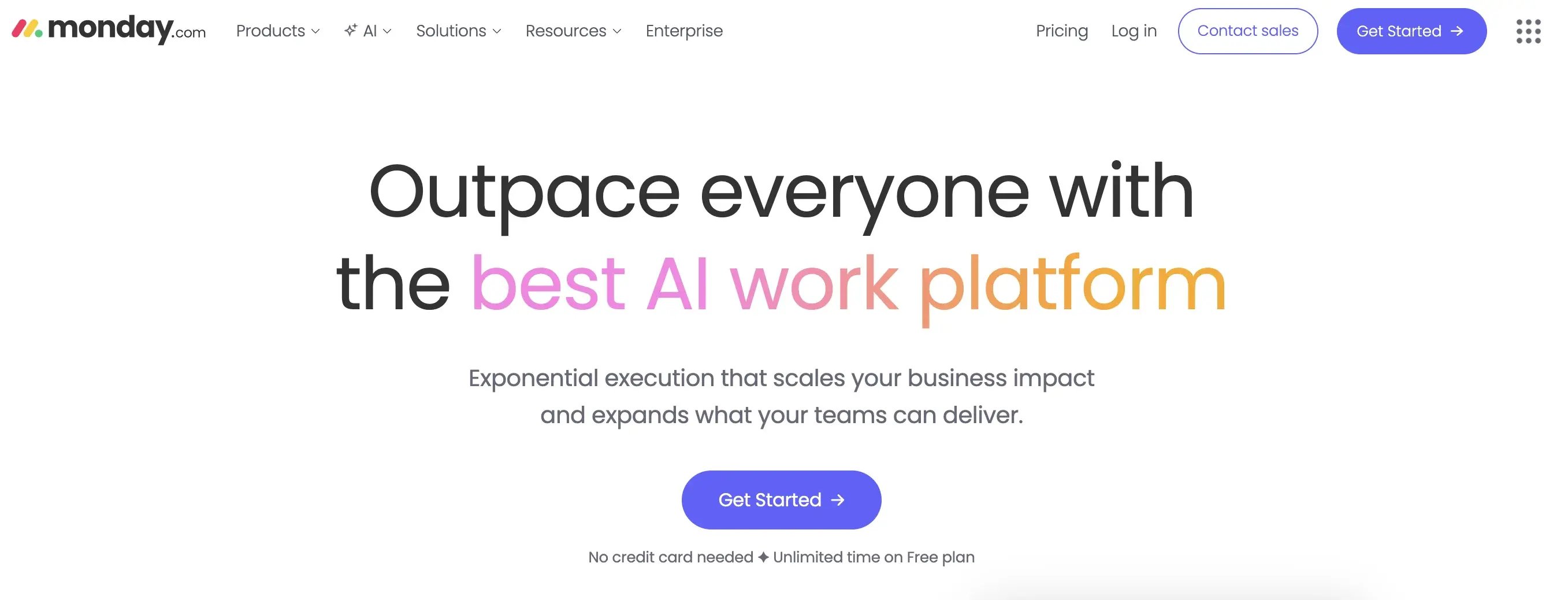
Widely known for project management, Monday.com has built a highly flexible CRM that is perfect for businesses where the sales cycle is closely tied to project delivery.
- Pros: it is easy to build custom workflows without any coding knowledge, and the platform’s 'boards' are highly visual and engaging for the team. It is a good option for collaborative teams that need to see how sales tasks impact post-sale execution.
- Cons: while versatile, it lacks some of the hyper-specific sales tools—such as advanced email sequencing or deep revenue attribution—found in dedicated CRM platforms.
Capsule
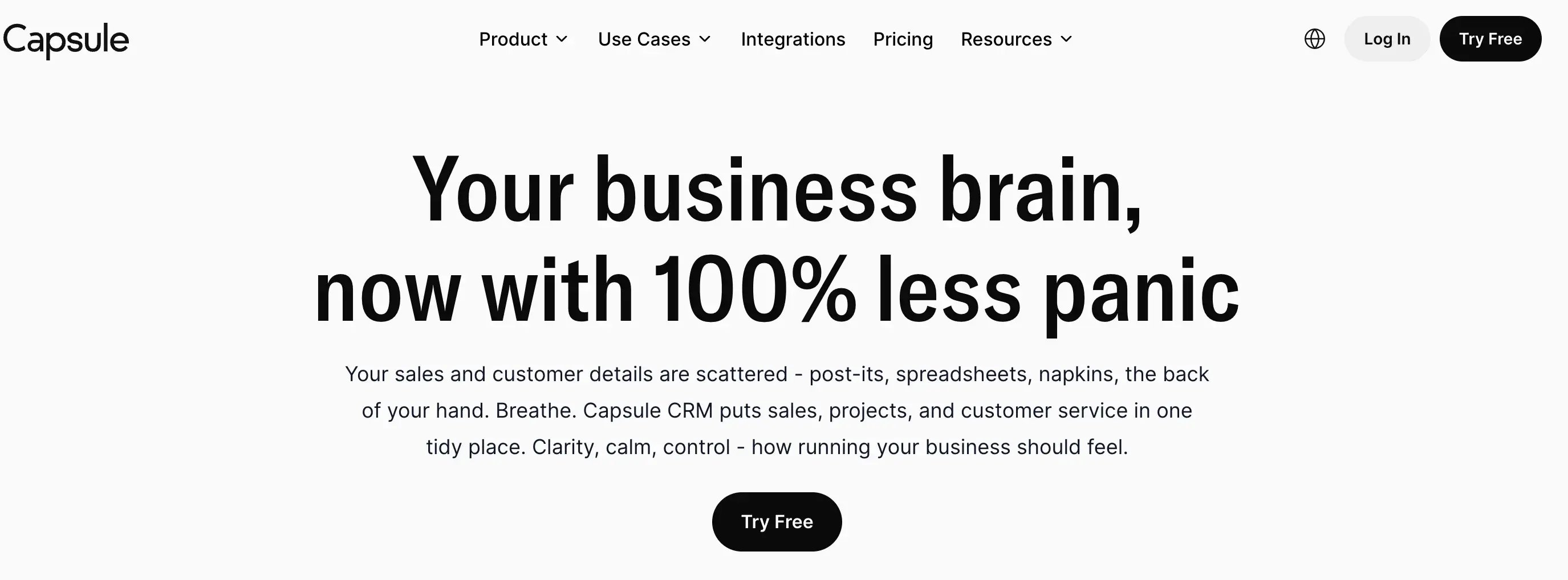
Based in Manchester, Capsule is a British-born CRM that focuses on simplicity and helping small businesses manage relationships without all of the additional components of a complex system.
- Pros: it is one of the easiest CRMs to set up due to its clean interface that organises contacts, tasks and opportunities with zero fuss. It integrates well with other common business tools like Xero and Google Workspace.
- Cons: it is less powerful than the other four CRMs mentioned in terms of marketing automation and is a tool for management rather than complex automated growth.
|
Feature |
HubSpot |
Pipedrive |
Zoho |
Monday |
Capsule |
|
UK Hosting |
Yes |
Yes |
Yes |
Yes |
Yes |
|
Free Tier |
Yes (Unlimited) |
No (14-day trial) |
Yes (3 users) |
Yes (2 users) |
Yes (2 users) |
|
Key Strength |
Growth marketing |
Sales execution |
Customisation |
Workflow flexibility |
Simplicity |
Strategies for CRM implementation
Successfully adopting a CRM requires a clear plan that aligns with your specific business goals. For most SMEs in the UK, the transition takes approximately six months. This period includes data cleaning, staff training and workflow setup. To get the most out of the CRM you choose, focus on creating high-impact sales pipeline management dashboards that can help you with forecasting down the line.
At Cyberclick, we recommend a People-Led Marketing (PLM) approach to implementation, placing the user experience of both your team and your customers at the centre of the design. This ensures that your customer database software becomes an asset rather than a source of frustration for your sales reps. Key steps for a smooth rollout include:
- Conducting a data audit: identify and remove duplicate or outdated contacts before importing them into the new system.
- Defining clear lead routing: automate how leads move from marketing to sales to make sure that no high-intent prospect is lost.
- Establishing 'quick wins': start with simple automation, like automated meeting booking or email tracking, to demonstrate immediate value to leadership.
Conclusion
Choosing the right CRM for your small business is all about finding the perfect intersection of scalability, ease of use and strict data protection. Whether you opt for the all-in-one power of HubSpot, the sales-focused agility of Pipedrive or the simplicity of Capsule, the goal to optimise your workflows and increase your success remains the same.
As an elite HubSpot partner, we help SMEs in the UK navigate the complexities of CRM migration and RevOps orchestration to ensure every digital interaction is an opportunity for sustainable growth.


Héctor Borrás
Key Account Manager Engineer at Cyberclick. Expert in web application development and system integrations with over 10 years of experience. He holds a degree in Mathematics, a Higher Degree in Computer Application Development, and a Higher Degree in Multiplatform Application Development.



Leave your comment and join the conversation