
HubSpot is a powerful solution that integrates communication directly with a Customer Relationship Management (CRM) database in order to drive revenue growth. Unlike standalone platforms, it allows you to send messages based on any data point in your CRM, ensuring that your outreach attempt is always relevant to the recipient's current stage in the funnel. This means moving beyond simple newsletters and toward sophisticated, data-driven strategies that accelerate the sales cycle and provide clear ROI visibility.
Choosing the right tool is critical for maintaining high email deliverability rates and building a predictable pipeline. While the platform offers advanced features like Breeze AI and robust automation, it also requires a strategic approach to managing costs and technical setup. This guide explores whether it is the right fit for your organisation by analysing its core strengths, practical limitations and specific use cases for the UK B2B market.

Key takeaways
- CRM-powered email drives relevance: use live CRM data to deliver timely, personalised emails that align with each stage of the funnel.
- Prove ROI, not engagement: revenue attribution reporting links email activity directly to closed deals.
- Scale nurturing with automation and AI: workflows and Breeze AI reduce manual effort while supporting long B2B sales cycles.
- Stay compliant while protecting deliverability: built-in UK GDPR controls manage consent and lawful basis at contact level.
CRM-powered emails
The primary reason to use HubSpot for email marketing is the native connection between your messaging and your data. When your email tool 'talks' to your CRM, you eliminate the need for manual exports and imports, reducing the risk of using outdated information. This allows your marketing team to act as a strategic partner to sales, delivering leads that are already educated and engaged.
Hyper-personalisation with smart rules
Using smart content (or personalisation), you can change entire sections of an email based on the recipient's industry, job title or previous interactions. For example, a marketing professional in the SaaS sector might see a different call-to-action than an operations manager in manufacturing. This level of relevance significantly improves engagement because you are addressing the specific pain points of each individual.
Beyond open rates: revenue attribution reporting
Most email platforms stop at clicks and opens, but HubSpot offers revenue attribution reporting to show the financial impact of your campaigns. You can see exactly which email a prospect clicked before signing a contract, allowing you to justify your marketing spend with hard data. This shifts the focus from vanity metrics to actual growth, helping you refine your strategy based on what truly converts.
Key capabilities for B2B teams
For B2B organisations with long sales cycles, email is not just a broadcast tool but a nurturing tool. HubSpot provides the technical infrastructure needed to manage complex relationships over months or even years.
Automated workflows and lead nurturing
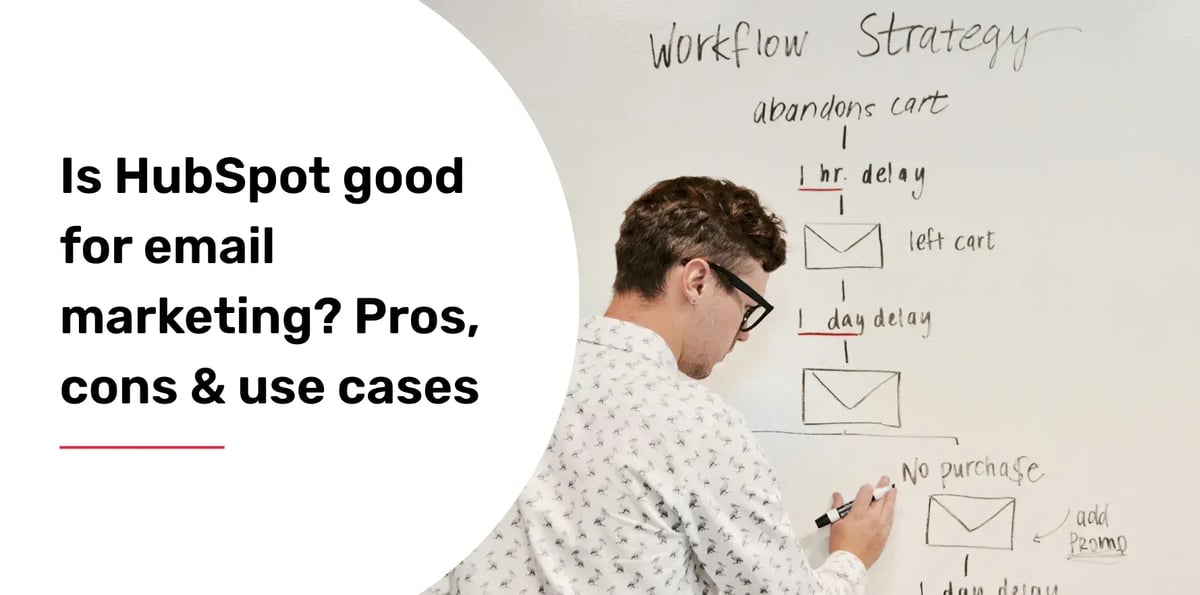
Effective B2B lead nurturing requires sending the right information at the right time. By setting up marketing automation workflows, you can trigger a sequence of emails when a prospect downloads a whitepaper or visits a specific pricing page. These workflows can also alert your sales team when a lead shows high intent, making sure that no lead is missed due to human delay.
Managing UK GDPR on HubSpot
Compliance is a top priority for UK businesses, and HubSpot simplifies this by tracking the UK GDPR lawful basis for every contact. You can set up subscription types that prevent you from emailing anyone who has not provided explicit consent or whose 'legitimate interest' has expired. This protection helps maintain high email deliverability rates as well by making sure that you only contact people who want to hear from you.
AI optimisation with Breeze AI
Breeze AI is HubSpot's AI agent. It helps teams scale their content production without losing quality. You can use it for A/B testing email subject lines to see which versions drive higher opens, or to generate initial drafts for complex newsletters. This allows your team to focus on high-level strategy while the AI handles the repetitive task of content variation and optimisation.

Limitations and considerations
While HubSpot is robust, it is an investment that requires careful management to ensure a positive return.
'Marketing contacts' pricing
A common frustration for growing companies is the HubSpot marketing contacts pricing model. You only pay for the contacts you actually target with ads or emails, but as your database grows, costs can escalate quickly. That being said, having a process for cleaning your CRM and moving inactive leads to 'non-marketing' status is critical to keep your monthly fee manageable.
Design flexibility vs. ease of use
The drag-and-drop editor is excellent for speed and consistency, but some designers find it limiting compared to custom-coded templates. While you can create highly technical HubSpot migrations and custom designs, it often requires specialist expertise to get the exact look and feel of a bespoke brand. That being said, for most B2B teams, the trade-off for better data integration and ease of use is well worth it.
Real-world use cases for B2B
To get the most out of HubSpot for email marketing, you should look beyond the standard monthly newsletter.
Client onboarding sequences
Once a deal is closed, you can automatically trigger an onboarding sequence to help the new client get started. This reduces the burden on your customer service team and ensures a consistent, high-quality experience for every person who joins your brand.
Re-engagement campaigns for cold leads
If a lead has stopped engaging, you can use automation to send a 'break-up' email or a special offer based on their previous interests. By using smart content, you can make these emails feel like a direct, one-to-one message from a sales lead rather than an automated marketing blast.
Conclusion
So, is HubSpot good for email marketing? For B2B organisations that value data-driven decisions and personal experiences, the answer is a resounding yes. By putting your email efforts into the same platform as your CRM, you gain a level of visibility and automation that standalone tools simply cannot match.
While the HubSpot marketing contacts pricing requires active management, the ability to prove ROI through revenue attribution reporting and scale growth with Breeze AI provides a significant competitive advantage.
If you are looking for a partner to help you master these technical integrations and build a predictable B2B lead nurturing engine, Cyberclick is here to help.


Marina Avilés



Leave your comment and join the conversation